D8 Visa in Portugal: My Experience So Far
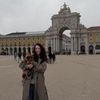
Exactly one year after I applied for my D8 visa at the Portuguese Consulate in Porto Alegre, Brazil, I finally had my AIMA interview in Porto. My residency card will likely be approved and arrive in under 90 days.

I started writing this article at the start of last week, when I was feeling very upset with the waiting time and the idea that, even though my fiscal situation and visa were totally fine, not having been in person at AIMA made me think that there was a slight chance things would fall apart, and I entered a very stressful situation. I do think that it was worth it in the end, and also, as a Portuguese friend told me, she agrees that we should stay here.
If Portugal gives you the right to move around Europe, we should make an effort as foreigners to adapt to the local culture (even if that means GEOGRAPHICAL PRISON).
A couple of things that happened in my interview:
- The AIMA agent said it was the first time in her life she saw a CPLP (Community of Portuguese Language Countries) visa with a D8 like mine (apparently a very rare combination).
- When she went to check things with her coworker, I felt my heart sinking a little bit, thinking potentially the Portuguese Consulate back in Brazil missed something and this time things would fall through.
- Overall, my experience at AIMA was just fine, and once again the news and social media proved themselves wrong (and a few travel influencers too). If you have patience and a muscle for resilience, this works.
My feelings before the AIMA interview

I wrote this a couple of days ago, before knowing I would have the residency approved:
Ever since I made the decision to move abroad with a D8 visa, things feel increasingly harder as tomorrow becomes more difficult to predict. I have been thinking a lot about the decision to move, because the bureaucracy has put my life on pause for 6 months.
If you have researched this visa in the past, you will notice that because the Portuguese immigration system is flooded with applications, AIMA interviews often end up being scheduled after the visa expires. For me, it meant around 6 months of uncertainty, which can now stretch to 9 months depending on when my residency card arrives. This means that for months, people are left in limbo regarding their immigration status until the AIMA interview and, finally, receiving their residency card (título de residência).
Honestly, it is much harder than I thought it would be, considering the nature of being in an unanswered position where I still cannot say for sure that Portugal recognizes me as a temporary resident.
One thing for sure: this experience made me respect immigrants so much. You read about it, but your perspective shift can only happen once you live it yourself. I can also say that there are easier or more difficult approaches to immigration, but in general, when you move to a different country, you will be changed and humbled by that experience.
After I moved to Portugal, a lot of immigration policies started to change. This news, for good or for bad, made me rethink my decisions. Because I was already in Portugal, I decided to keep with my initial plan and not make any changes. I think if it had happened before I moved, I probably would have thought twice before committing to it. Or would have chosen a different country.
AI helped me achieve this
I am sure we are living in a very particular moment in time. Even though I am a bit skeptical toward AI, for good or for bad, AI helped me achieve a D8 residency in Portugal. My entire residency process, from visa application to residency, was supported by AI, and more recently by my personal agent. I don't trust AI, and I still had to research and do lots of reading. Accurately or not, it helped me with reassurance (I don't trust it, but having control over what content it consumes or uses as a reference helps with reassurance), revising checklists, timelines, and suggestions to facilitate the life of immigration officers, as we do want to please them.
There is a lot of documentation online, and I always made sure to use the official sites to confirm requirements, but how reassuring it is to have AI help with revising and checking everything. I did the whole process by myself, and I am not sure that would be the case in a world without AI. The same goes for my dog's documentation, and she, as a Brazilian dog, has a European Passport. Again, I always checked the official documentation. It did save me tons of money too: enough to pay for my agent's house and models for many months.
My experience in Portugal so far: not a digital nomad dream, unless you have A LOT OF PATIENCE

My digital nomad residency is not going quite as expected
Building and keeping a routine in Lisbon has become a real challenge. It is not by chance that Portugal is known for having high sedentary rates, and for some reason, it has been hard to cut through Instagram and tourist recommendations to find real Portuguese life while staying in Lisbon. A lot of things here have changed as a result of globalization, as is the case in most big cities. That makes me a bit sad, considering the fun in travel is learning about a new culture, and if every culture starts to look more and more the same, I could just stay at home.
If you want, you can go to the exact same specialty cafes, Pilates studios, and stores whether you are here, in the US, or in southern Brazil. Once you realize that, you start looking at purchasing power, tax incentives, safety, and healthcare. You can then make a case that the old line between developed and developing countries is no longer so clear-cut. Still, the place where you live profoundly impacts how you build your daily routine and how connected you feel to the world. That is why I initially picked Lisbon, even though I have not adapted to the weather very well. There are many downsides compared to my life back in Brazil (cost of living being a big one), but the upside of feeling safe and seeing far less inequality (even though it exists, it is much less extreme than in Brazil), combined with the access to culture and the arts, changes how you experience a city. I can also state that the version of me 12 years ago would have jumped with excitement if she knew she would move to Europe. Of course, back then the world was a much different place, and any version of Europe I had at the time was very romanticized by experiencing only the good parts of it: the food, the people, the history.
This is the main reason why I believe immigration, or simply a residency process, is such an intimate and personal decision: it involves so many more dimensions than statistics on quality of life or living expenses. I am still a supporter of staying based in your home country and traveling abroad. In fact, when I did it for a couple of years, I was much happier as a person. Traveling for a few weeks or months at a time is the perfect balance for experiencing new cultures without the heavy friction of building a new life from scratch somewhere else.
Even when you decide to travel constantly, you are still part of a system. It doesn't feel like it, but you are. The lack of freedom from bureaucracy is a nightmare, especially for weaker passports. You still need to work and pay taxes, and when you really think about it, a person without a European passport has far fewer rights, and the constant bureaucracy with immigration offices can become a real hurdle in your life. I guess people find ways, but it does feel unfair the way policies from different countries are so fragmented and you need to spend so much time and effort looking into these things to make sure you are not compromising the law.
That is why, going against most of the playbooks out there, my advice is: if you decide to make the move, go all in, and rent a comfortable place because you are actually moving your life. Considering the emotional toll of it all, I would not prioritize squeezing out extra savings over comfort, particularly during the first year. Having savings is essential, of course, so make sure you have that buffer. But if you reach a point where you have to choose between adding a small extra amount of euros to your savings versus paying a bit more for daily comfort, I would choose comfort. I say this from a place of privilege, of course, and it remains a very personal decision depending on each person's situation and life goals.
Lisbon is beautiful, but I am still not sure this is the right place for me, especially after spending months here without a car, holding off on any major financial commitments while I wait for my final residency approval from AIMA.
I guess part of that is my own mistake, and I have made plenty of them. In my head, I treated this move like long-term travel. That is far from the truth: this is my new life in Europe. It is my home, where my dog and I actually live. It is comforting to tell yourself, if nothing goes right, I can just go back. But if you really think about it, your reality has already changed so completely that going back will never feel the same. As immigrants often say, you end up belonging neither fully here nor to your hometown anymore.

I never, ever regretted a change of scenery in my life. I only regretted the times I stopped believing in myself and returned home out of fear, out of thinking that I would not have enough capacity to take care of myself or my pets. For a long time I believed that. As I grow older, I finally understand that asking yourself to stay quiet and prioritize the voice of others is the worst thing you can do, because the bill eventually arrives and it is not cheap. Spending money on your own dreams is also not cheap, but you can make the choice. It is just not a very easy one.
The best part of moving and changing scenery is learning that a lot of our own concerns are planted by our surroundings. We end up prioritizing things that aren't really important for ourselves.
My view on AI has changed in the last few months, but I decided to force the optimism
In 2024, I wrote about how AI will not replace humans. Lately, even on that point, I have started to feel a bit unsure, to the point of feeling a strange numbness toward learning and studying new things. You start to think: what's the point? I do not really need to fully understand a concept to put it in production anymore. If you think about it, copying and pasting code was one thing, but what happens when you barely need humans even to write the prompts?
Because I was stuck in a cycle of watching the news, I decided to wipe my YouTube history and start fresh by searching for travel tips, Portugal travel, other expats' stories, and anything that might make me feel a bit less numb toward the world we are currently living in.
Somehow, I ended up watching an interview and came across this internet author, Mr. Money Mustache, and one of his latest writings on AI: Will the AI Bubble Destroy Our Retirement?
I am not sure to what extent his view is delusional or just optimistic, or maybe it is just history repeating itself. He says, and I would like to leave it registered here:
"The news is not helping you to keep informed, it’s just poisoning your mind with a hand-picked selection of the scariest stories of each day. If you want to learn about something, go find a book on the subject. And if you want to make a difference, the only thing that counts is not the news stories you watch, it’s only the actions that you take, in other words, your Positive Behaviors."
The article itself is really interesting, and I recommend it! As I close more than half a year in Portugal, questioning my life decisions and getting older, I feel there should be more space for brighter perspectives.
"Focusing on good close relationships and being kind to people. Practicing Gratitude and Optimism as your lifelong philosophy. And making sure you pack as many healthy (outdoor) activities into your days as you can."
The world feels very messy right now, but there are so many good things under our control, as long as we pay attention.
- The Enterprise CDN Log Analysis Cookbook for Technical SEO →
- Adding an agent to my personal blog repo: Is it worth it? →
- Why My Blog Was Down For Weeks (And The Netlify DNS Mistake You Should Avoid) →
- Serving Markdown version of pages to AI: Is it worth it? →
- Building a Multi-Agent System to Find My Next Neighborhood Abroad →
- Notion Blog with AI Translation →
- A new approach to Information Architecture in the age of AI? →